
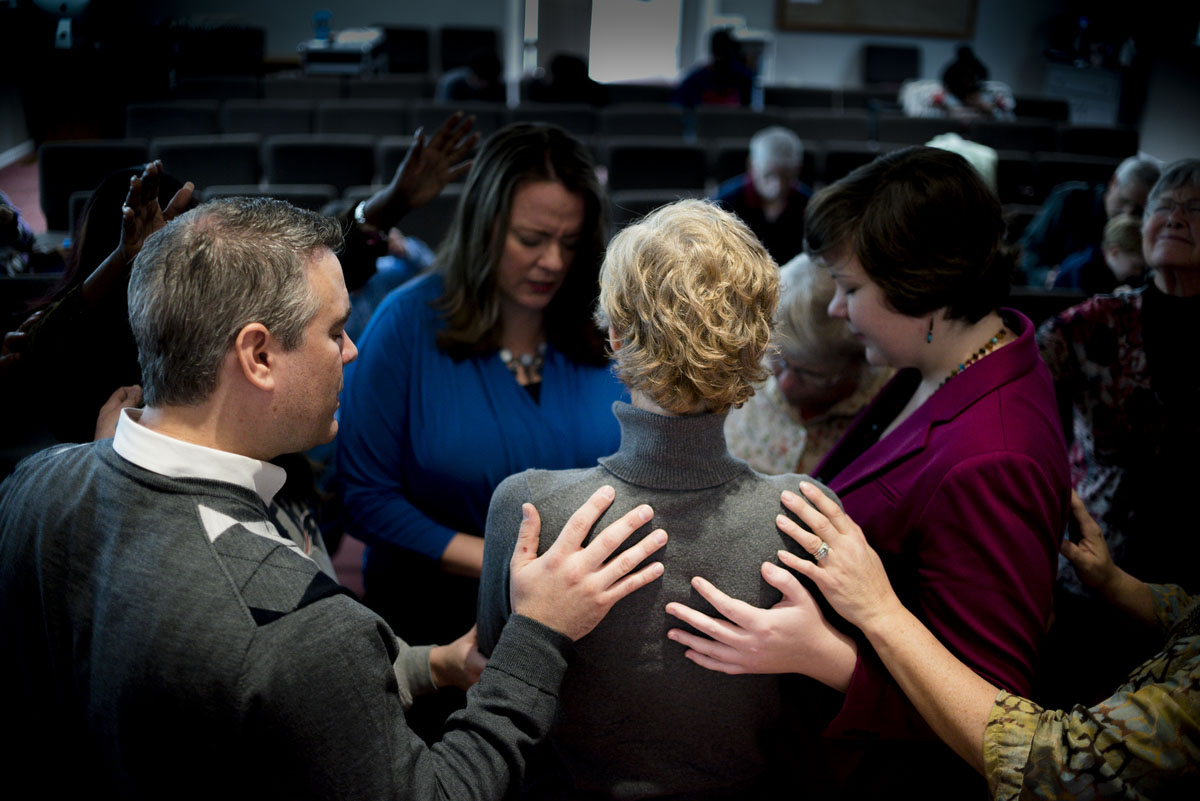
Warfare at the local level includes prayer ministry through laying on of hands for healing Photo: Lightstock
The Local Church
In Acts 2:42-47 we see the local church in action after the birth of the Church at Pentecost. It was characterised by -
• Teaching by the apostles
• Fellowship
• Celebration of The Lord's Supper
• Prayer
• Evangelism and outreach
Later in Paul's Letters to the churches in Colossae, Corinth and Ephesus, we see how the fellowships in these three cities spread the Good News of the Gospel and engaged in the ministry to which Jesus had called them to -
A. Proclaim the Good News that Christ has won the victory over sin, death and Satan through his death, resurrection and ascension
B. Demonstrate the Good News by enforcing the victory of Calvary through saving the lost, healing the sick and suffering, and setting captives free from bondages of all kinds
Warfare at the Local Level
In the process of carrying out Christ's commission the apostles and Paul experienced enemy opposition of various kinds. These included:
• Opposition from Jewish religious groups eg Judaisers who refused to believe Jesus is the Messiah promised in Scripture and insisted on circumcision
• False teaching eg by some who taught ascetism and forbade the eating of certain foods
• Chaos in services with people getting drunk at The Lord's Supper and abusing the gifts of the Spirit in Corinth
• Opposition from pagan worshippers eg of Artemis/Diana in Ephesus and silversmiths who started a riot
• Opposition from traders whose businesses were affected by people being delivered from demonic spirits eg in Philippi
• Opposition from the Roman civic authorities for Christians' refusal to swear allegiance to the Emperor by saying Caesar is Lord
Forms of Opposition
In the Book of Acts we see the apostles being subjected to
A. Natural attacks
• Riotous mobs in the arena/theatre eg Ephesus
• Beatings eg at Philippi
• Imprisonment without trial eg at Philippi
• Attempts at stoning to death eg at Lystra
• Execution in the arena by being burned at the stake eg Smyrna
• Sacrificed at a pagan temple eg Pergamum
All these attacks at the physical level were orchestrated by the enemy behind the scenes.
B. Supernatural attacks
In Acts 13:7-11 A sorcerer called Elymas/Bar-Jesus at Paphos in Cyprus had an influence on the Roman governor Sergius Paulus. The proconsul, an intelligent man, sent for Barnabas and Saul because he wanted to hear the word of God. But Elymas the sorcerer (for that is what his name means) opposed them and tried to turn the proconsul from the faith. Then Saul, who was also called Paul, filled with the Holy Spirit, looked straight at Elymas and said, “You are a child of the devil and an enemy of everything that is right! You are full of all kinds of deceit and trickery. Will you never stop perverting the right ways of the Lord? Now the hand of the Lord is against you. You are going to be blind for a time, not even able to see the light of the sun.” Immediately mist and darkness came over him, and he groped about, seeking someone to lead him by the hand. The effect of this power encounter was the Proconsul was converted, demonstrating the reality of Christ's victory at Calvary over the enemy's forces.
In Acts 16:16-18 we read of a power encounter between Paul and a young slave girl, who was demonized and was being used by her masters to tell people's fortunes. She had been following them for several days and had actually been telling the truth when she said “These men are servants of the Most High God, who are telling you the way to be saved.” But Paul realised she was being used by the enemy to distract people's attention from the message of the Gospel and so he commanded the demon to shut up and come out. Once again, the result demonstrated the victory of Calvary over all demonic spirits and led to conversions.
The Local Church & Spiritual Warfare